Hiring
How to Check Your AI Hiring Tool for Bias
Check it yourself: fix the criteria first, see the evidence behind each score, compare it with blind human scoring and keep a person on the final call.
Author
Xquizit
Reading time
3 min read

An illustrative scenario: you have 2,000 applicants queued for an AI screen on Monday. In the planning call someone asks, “How do we know this thing isn’t biased?” Nobody in the room can answer, and all the vendor deck offers is the word “fair”.
Hiring guideWrite the yardstick before the AI scores anyone
Vague criteria are where bias gets in.
You can’t read bias off a brochure, so check the tool yourself before the drive. Fix the criteria first, see the evidence behind each score, compare the tool with blind human scoring and keep a person on the final call.
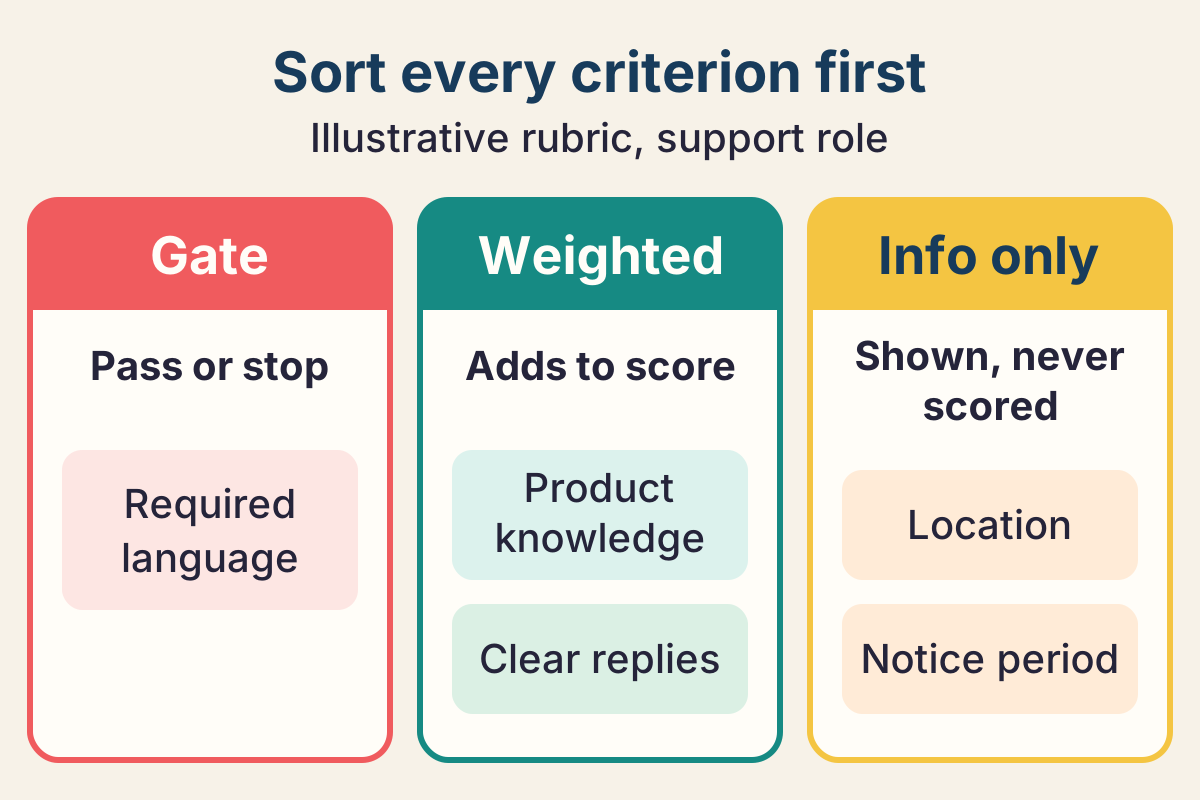
Start with the rubric. If “good communicator” or “culture fit” has no definition, every candidate gets measured with a different ruler. Build criteria from the job description, then decide which are hard gates, which carry weight and which are for information only.
In Xquizit, the rubric starts from your JD and recruiters can edit the criteria, weights and scoring logic. Xquizit keeps gates, weighted factors and report-only fields apart, so you can show a detail like location without letting it touch the score.

Ask to see the evidence behind every score
You can only challenge a number that shows its working.
A score with no reasoning asks you to trust it. I’d want to see which resume lines or answers produced it, and what’s missing. Then a recruiter can disagree with something specific.
Xquizit labels resume evidence as explicit, inferred or missing, and its reports pair scores with strengths, gaps and answer evidence. Read “missing” as “not shown”. A candidate who didn’t list a skill may still have it, so ask about it in the interview.
Run a blind sample test in the pilot
An illustrative test plan you can use with any vendor.
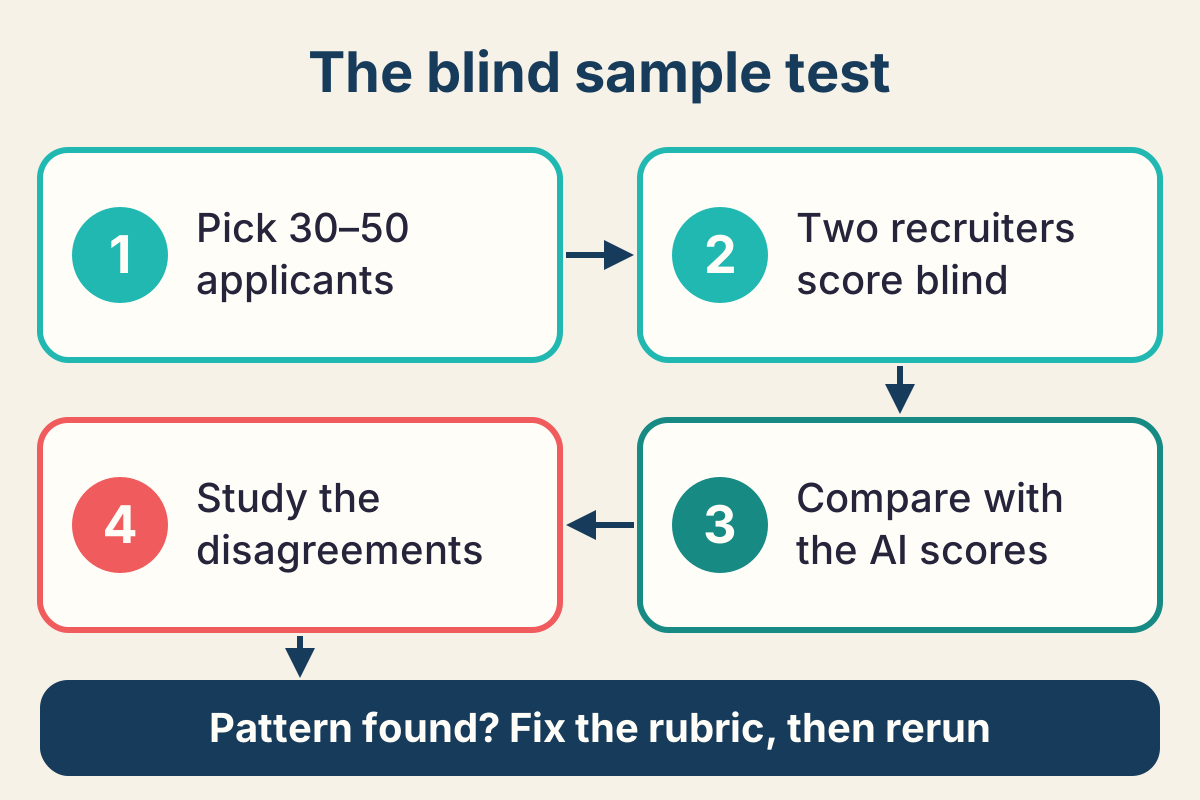
Pick a mixed sample
Take 30 to 50 real applicants from different colleges and cities.
Score them blind
Two recruiters use the same rubric without seeing the AI result.
Read the disagreements
Look for a pattern in who the tool marks down and your recruiters don’t.
Fix and rerun
Tighten the criterion behind the pattern, then score a fresh sample.
Run this check in any vendor’s pilot, ours included; we can’t predict how it will come out. Our team helps set up the role and rubric, and you can pilot Xquizit on a live role.
Keep a person on the decision
Scores and flags are reasons to look.
Send borderline candidates to a recruiter before anyone rejects them. In Xquizit, recruiters review those cases and can override the tool, and the final call is theirs.
Regulators lean the same way: New York City bars employers from using an automated hiring tool unless it had a bias audit within one year of use, and the EU AI Act lists AI used for recruitment or selection as high-risk (this isn’t legal advice, so check what applies where you hire).
What we’d do
We can’t promise zero bias, and I wouldn’t believe a vendor who did. I’d trust a tool that shows its criteria and evidence and holds up against my own recruiters’ blind scores, with a person making the last call. If a vendor won’t let you run these checks in a pilot, don’t put your 2,000 applicants through it.
Sources and notes
Regulation: NYC Department of Consumer and Worker Protection, Automated Employment Decision Tools; EU AI Act high-level summary. Xquizit rubric, evidence labels, reports, human review and pilot support: features, with product documentation available on request. The opening scenario, the sample rubric and the test plan are illustrative, not customer results or a validated test.
Run the bias checks on a pilot with us.
Latest insights
View all insights →
Shortlisting Hundreds of Applicants Without Reading Every Resume
By Xquizit
Set the pass mark before you read anyone, let each stage drop people on evidence, and save your own time for the final names and their answers.
Read insight
What to Tell Candidates Before an AI Interview
By Xquizit
Tell candidates five things before the link: an AI runs it, what it covers and how long, what is recorded, what to do if it drops, and who decides.
Read insight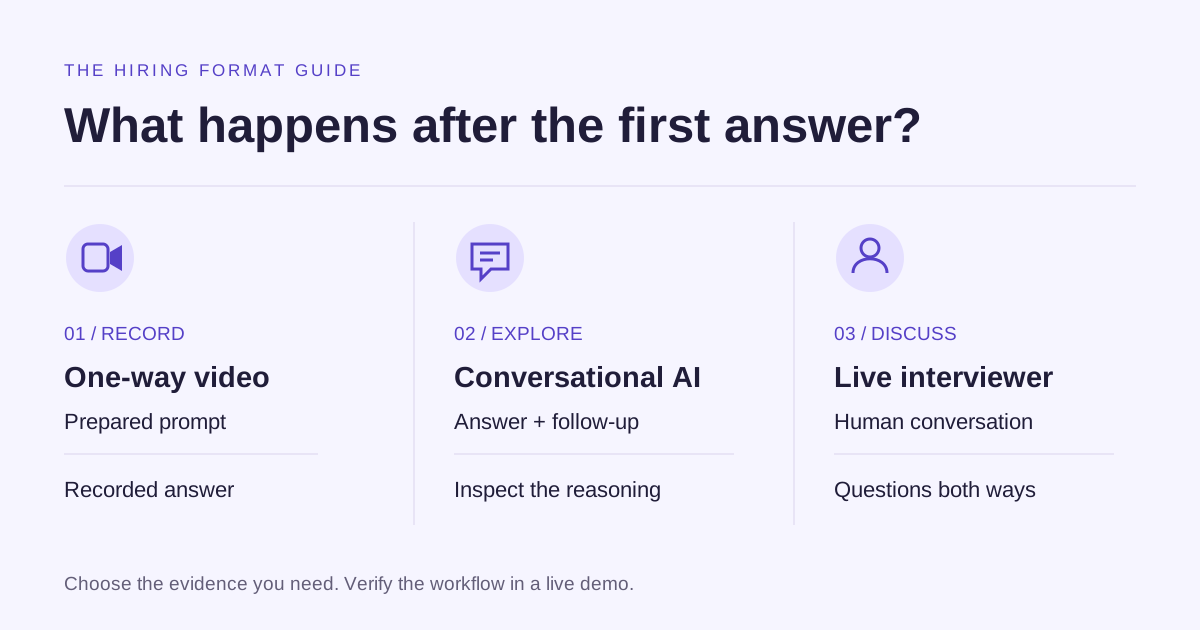
AI Interviews vs One-Way Video Interviews: Which Should You Use?
By Xquizit
Recorded answers, AI follow-ups or a live conversation? Choose the format around the evidence your hiring team needs.
Read insight© 2026 Xquizit. All rights reserved | ALGO ONE AI PRIVATE LIMITED